slot-ed.
Designed and built slot-ed from research to a live product. Existing tools like When2meet collect everyone's availability, but they never help the group actually decide. slot-ed adds a deadline, ranks the best options, and turns the same link into a confirmed invite.
- Role
- Product Designer
- Timeline
- 1.5 Months
- Type
- Product Design
- Tools
- Figma, Figma Agent, Claude Code
Problem
Why is finding time between friends & family progressively difficult throughout adulthood?
I was planning a group picnic with some friends and sent out a When2meet link. A week later, the poll was still half filled, and nobody knew who was supposed to pick the time. The plan quietly died in the group chat.
That's when I realized the problem isn't finding overlap.
It's getting a group to actually commit.
Competitive Analysis
| Tool | Response deadline | Finds free time | Free of cost |
|---|---|---|---|
| When2meet | |||
| Doodle | Paid model only | ||
| Partiful | |||
| slot-ed |
Every scheduler shows where availability overlaps, but none help the group decide. The organizer is left interpreting colors and chasing people.
When2meet's grid was built a long, long time ago, not giving an “inviting” feeling to guests and the host, and it's time we modernize the looks of this tool.
Some alternatives take multiple pages before you get a link. Others show ads to participants or lock basic features behind a paywall.
Meet Maya.
Maya is a 26 year old creative living in NYC. She is planning a birthday picnic for her friend Elise. She has 9 friends to invite and they all sit in different schedules each week.
Asking “what works for everyone?” gets 30+ messages and no decision.
“I don't need everyone's full calendar. I need to know which Saturday gets the most people there, and I need to know by Friday.”
So what is slot-ed?
An account-free web scheduler for friends & family that turns one shared link into a confirmed plan, solving three problems with existing tools.
Everyone shares their free times. No guessing.
Closes every poll on a deadline, so plans keep moving.
Ranks the best times and shows who's missing, so the group can decide at a glance.

Wireframing
From there, I designed the flow and the pieces it's built from.
Three screens carry the whole flow: a landing page that starts a plan, a scheduler for dates, hours and a respond-by date, and a share page with the group link and the organizer's own link.
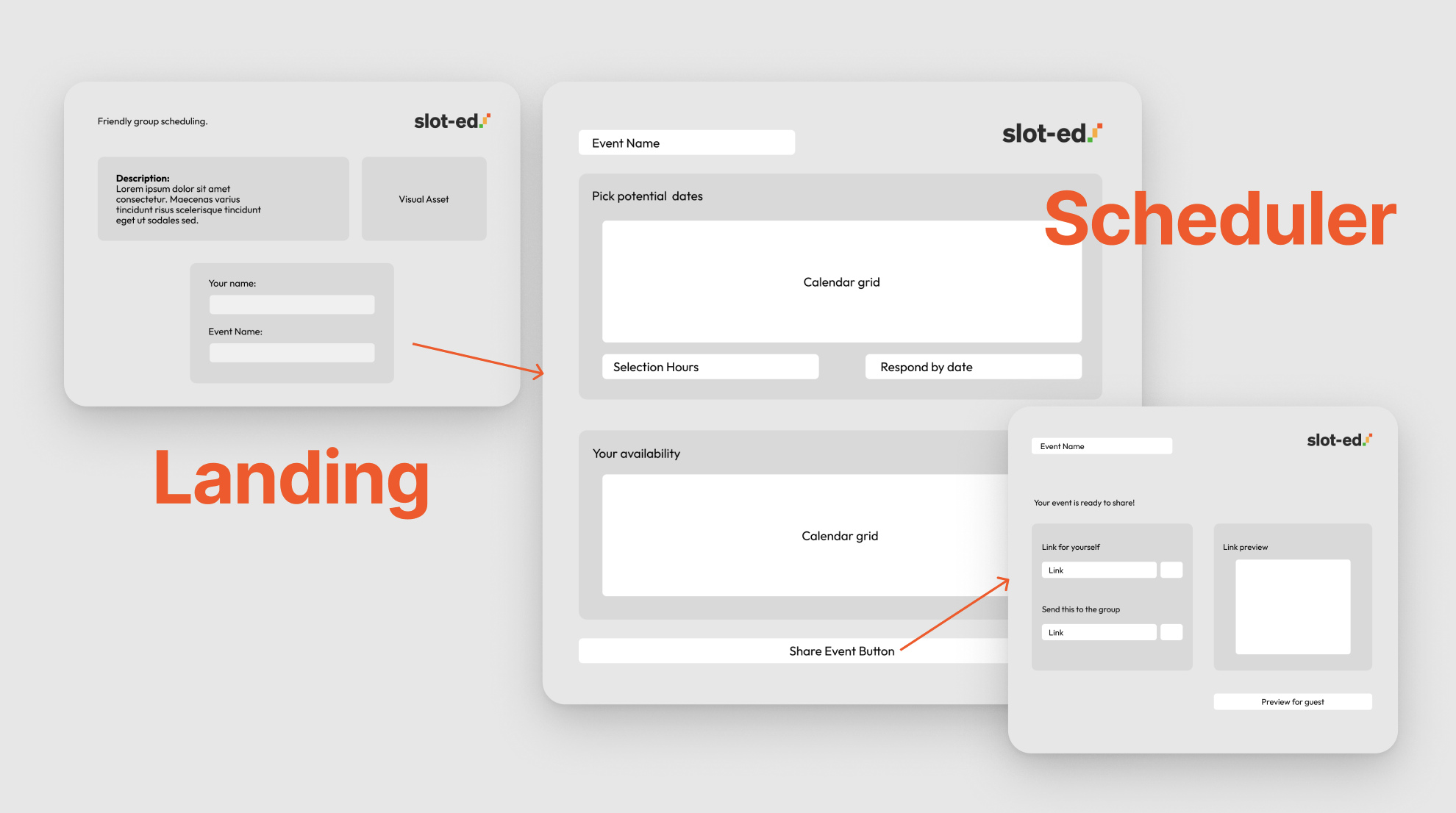
Components
The date picker, hour and deadline fields, and the drag-to-select availability grid.

What Changed?
I tested slot-ed with people planning real events.
Instead of using the same yellow for all tiles, I used different colors to reflect everyone's availability.

The Final Product
The final flow, in the order a group uses it: one person creates a plan, everyone adds their times, and the deadline turns the answers into a decision.
Creating an Event
The landing page explains slot-ed in one line and starts a plan with just a name. No accounts, no app to download.
Scheduling Function
The organizer picks potential dates, the hours to consider, and a respond-by deadline. slot-ed then gives two links: one to send to the group, and a private organizer link for picking the final time.
Invited Guest View
Guests see the deadline and how many people have responded, enter their name, and add the times they're free.
Results Screen
When the deadline hits, slot-ed ranks the best times and shows who's missing from each. Picking one turns it into an invite the group can add to their calendars.

Design System
Red, yellow and green carry meaning across the product, with Outfit ExtraBold for headlines and Inter for body text.

Impact
Reflection
Every competitor I studied could show overlap, but none helped a group commit, so the deadline, ranked results, and one-tap invite became the core of the design.
In testing, my single-color results grid left people unsure which times worked, and switching to red for unavailable and green for free made the best time obvious at a glance.
Keeping slot-ed account-free meant anyone with the link could pick the final time, so I designed a separate private organizer link instead of adding logins.
Most guests open links from a group chat on their phone, so I'd redesign the grid with larger touch targets and one day per screen with swipe navigation.
I'd run slot-ed with more people and measure how many guests finish without help, how long it takes, and how many plans get confirmed. More user research, more iterations!
A native app would add push reminders before the deadline and optional calendar sync, while the shared link stays free so guests never have to download anything.
